Le Journal N° 03
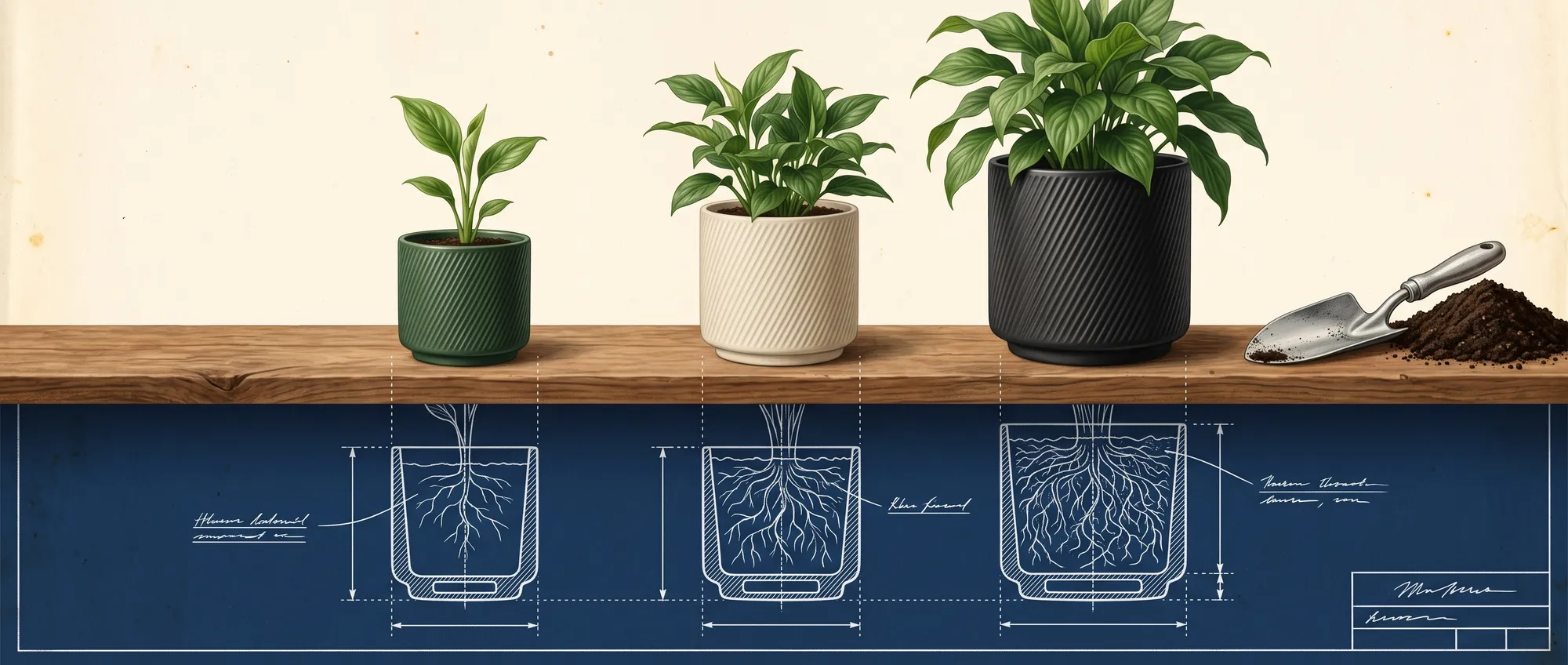
A size up, not a palace.
Sooner or later every healthy plant outgrows its pot. Repotting looks brutal and feels rude — to the plant, it is simply a bigger room with better air. Here is when to do it, and how to do it gently.
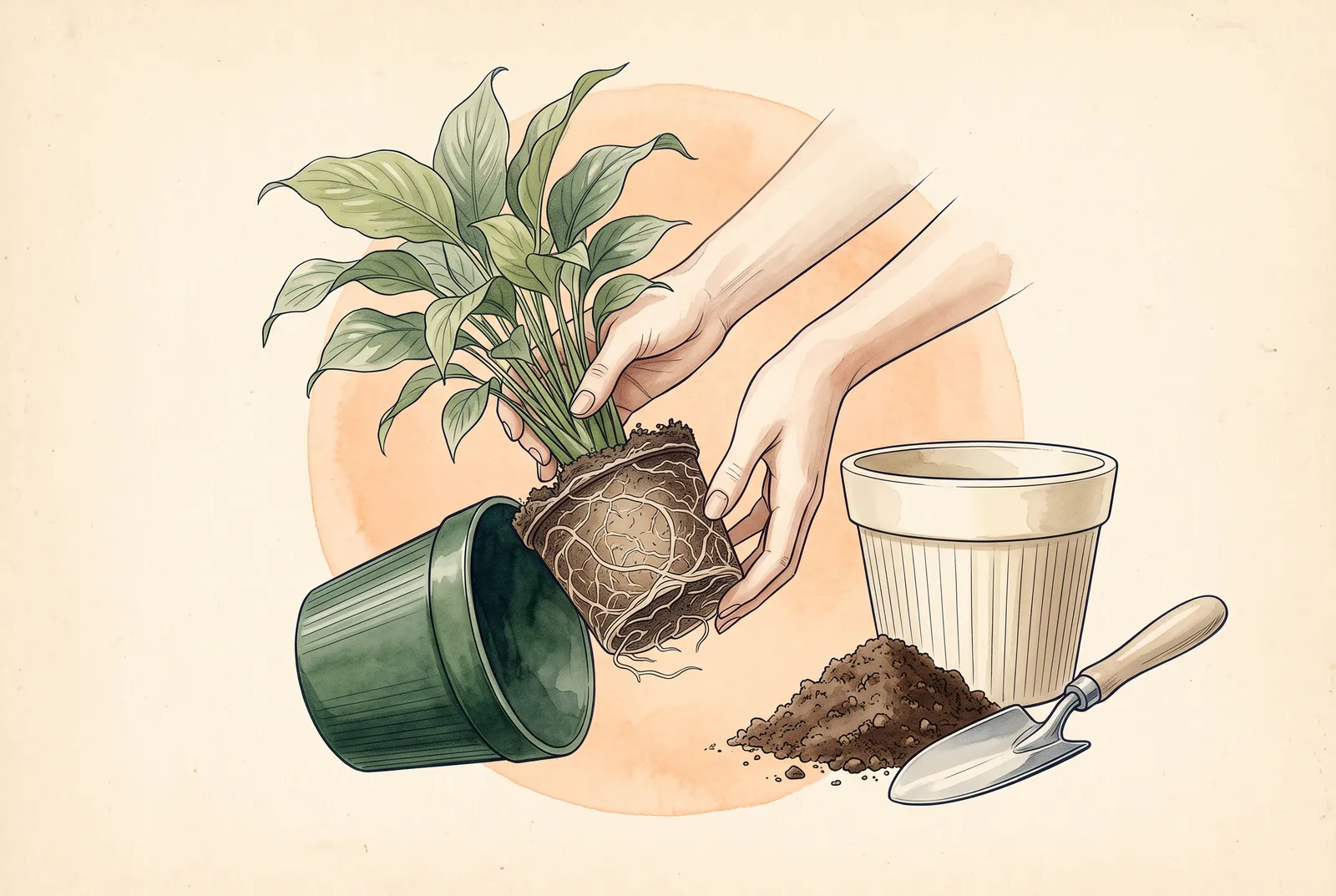
A pot is not a home for a plant; it is a season of one. Roots explore, fill the space they are given, and eventually run out of it — and a plant with nowhere left to grow below stops growing above. Repotting is how the story continues.
This edition covers the ground rules, the three signs that it is time, and the move itself — five gentle steps, no drama required.
The ground rules
- Timing
- Spring or early summer, at the start of growth. A plant in winter rest wants to be left alone.
- One size up
- Two to five centimetres wider, no more. Too much fresh soil holds water the roots can't reach yet — a palace drowns its tenant.
- The mix
- Airy above all: good potting soil cut with perlite or fine bark. Garden soil compacts indoors and suffocates roots.
- The exception
- Slow growers — snake plants, ZZ plants — actually like being snug. Every two or three years is plenty.
Three signs it's time
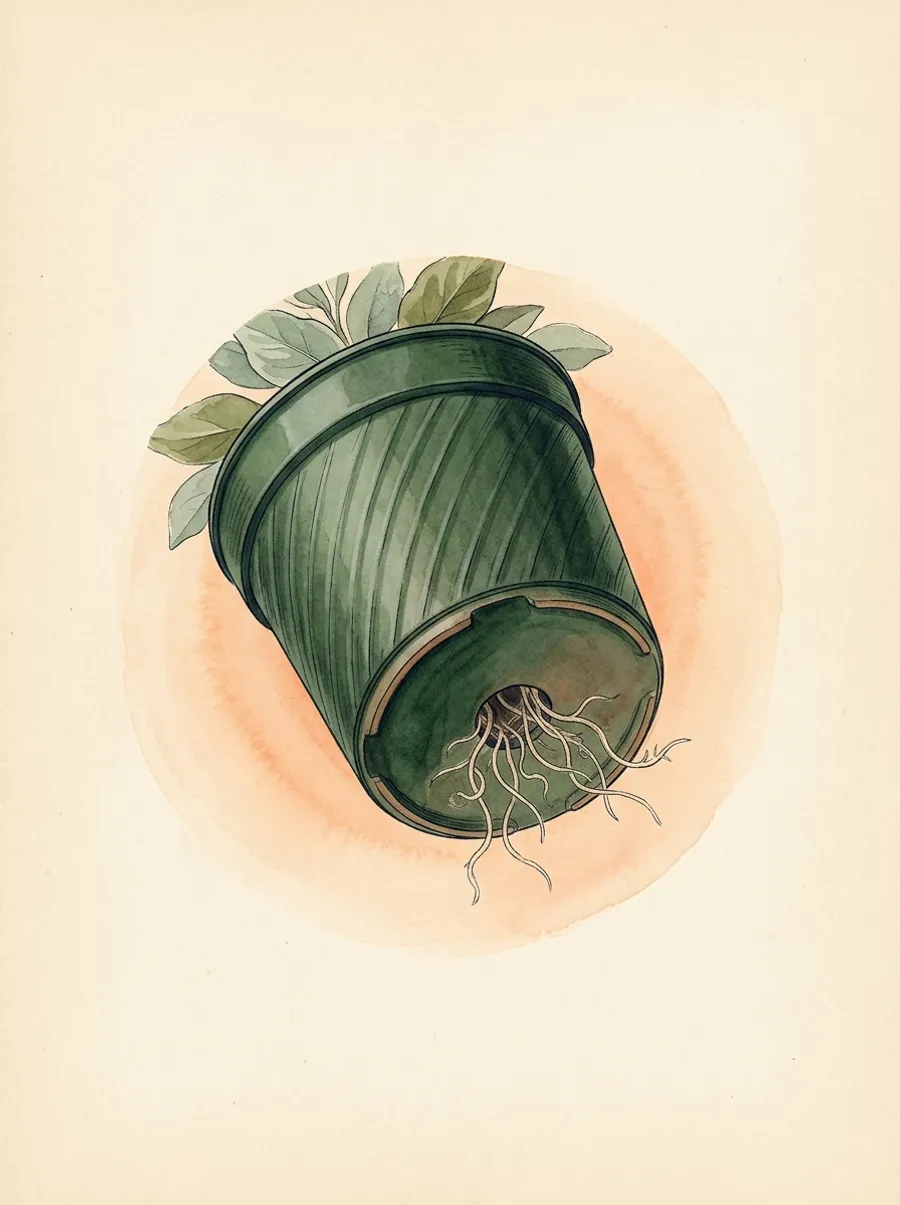
Roots at the door
Roots curling out of the drainage hole are roots that have searched the whole pot and found nothing left.
The clearest signal there is — check the base twice a year.
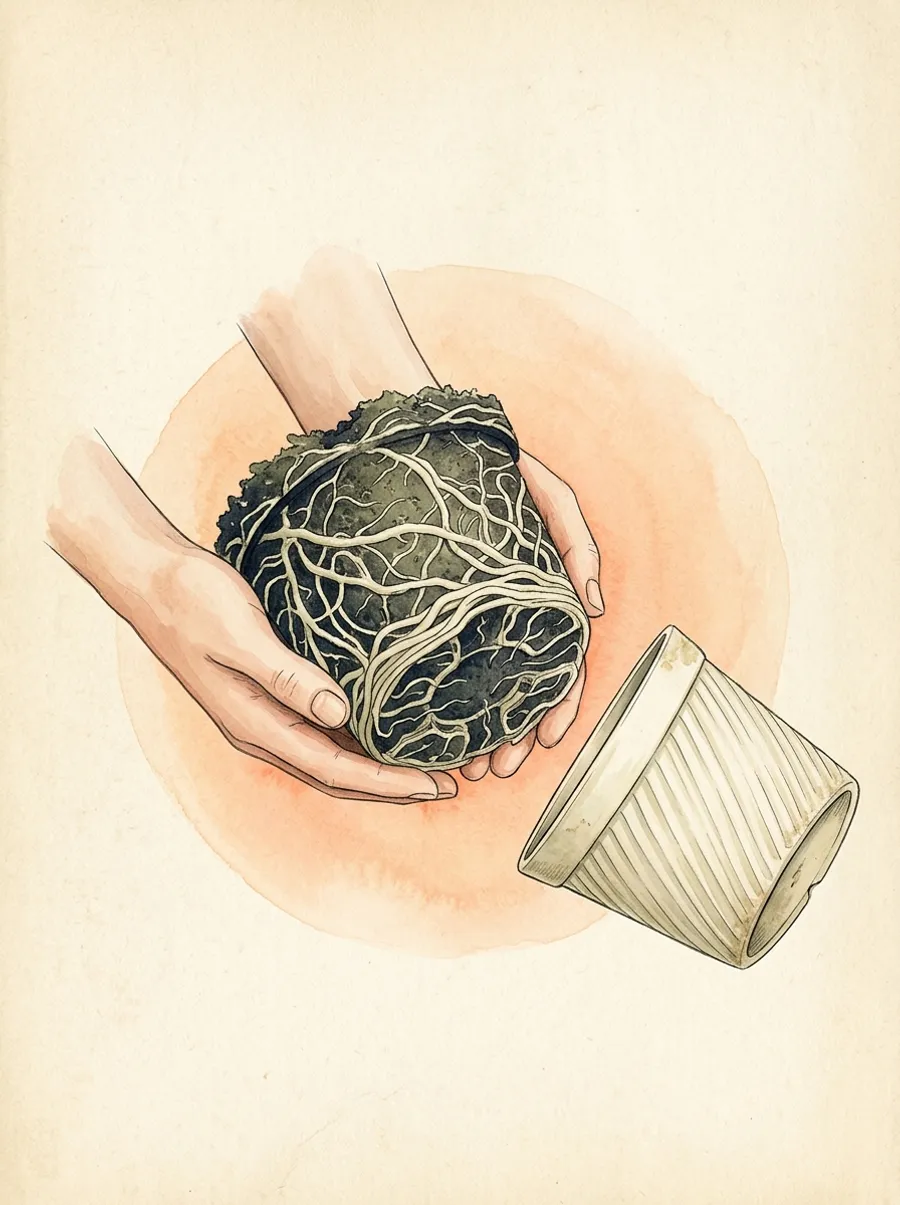
The coiled root ball
Slide the plant half out: roots circling the pot's shape, more white than brown soil, mean the room is full.
A moist root ball slides out in one piece — water the day before you check.
Thirsty and top-heavy
Water races through in seconds, the plant leans and sprawls, growth has stalled in the middle of the season.
More soil means more reservoir — and a base wide enough to stand steady.
The gentle repot, step by step
-
Water the day before
A moist root ball slides out whole. Bone-dry soil crumbles away from the roots; soaked soil smears and tears them.
-
The gentle eviction
Tip the pot sideways, squeeze or tap its walls, and slide the plant out by the base of the stems. Never pull a plant straight up by its leaves.
-
Tease the roots
Loosen the coiled outer roots with your fingers so they point outward again. Trim anything brown and mushy; leave everything pale and firm.
-
Set and fill
Enough mix under the root ball that the plant sits two centimetres below the rim, then fill the sides. Tap the pot to settle it — don't press the air out.
-
Water in, then let it sulk
One deep watering settles the soil around the roots. Then a bright, indirect spot, no fertilizer for a month — and patience while it settles in.
“Choose the pot like a pair of shoes: one size up, room in the toes — never a palace.”
After the move
Drooping for a week. Transplant shock, and entirely normal. Bright indirect light, no fussing — it will lift on its own.
Yellow leaves soon after. A bigger pot dries out slower. Keep your old watering rhythm and you'll drown it — check the soil, not the calendar.
Nothing grew for a month. Roots first, leaves follow — the plant is furnishing the new room below before it builds above.
White fuzz on the fresh soil. New mix plus still air. Let the surface dry and give the room some airflow; it fades on its own.
The plant is too big to repot. Top-dress instead: scrape off and replace the top five centimetres of soil each spring.
Roots fused to the old pot. Soak the whole pot for ten minutes and try again. If it still won't budge, sacrifice the pot — never the roots.