Le Journal N° 02
Water less. Watch more.
More houseplants are loved to death than forgotten: overwatering, not drought, is the leading killer of indoor plants. The fix is not a schedule — it is learning to read what your plant is already telling you.
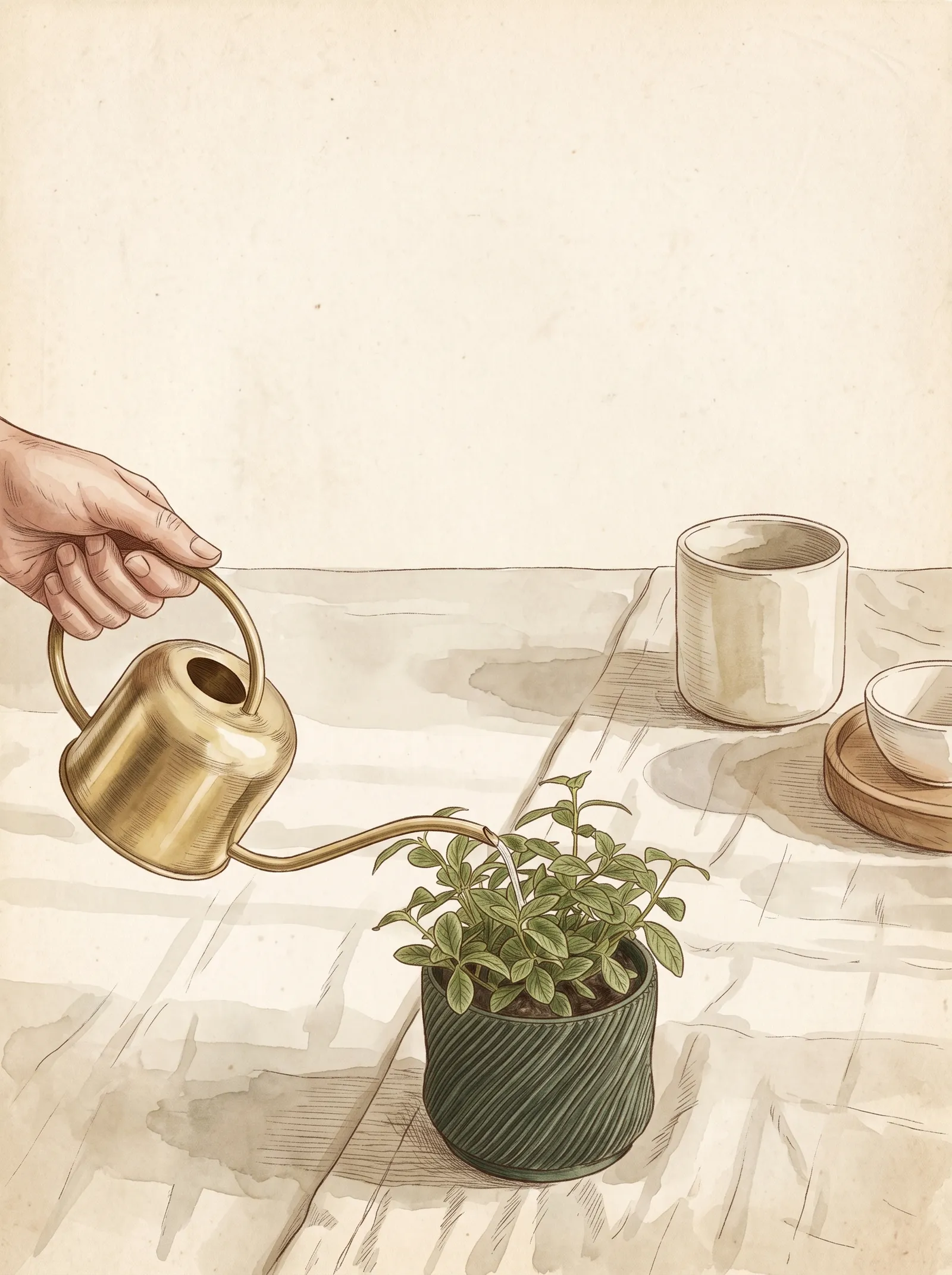
Here is the quiet truth about watering: the can is the least important part. Most of the work happens before you pour — in the checking, the lifting, the noticing. A plant watered when it asks, rather than when the calendar says, almost never goes wrong.
This guide starts with how plants actually drink, then three habits that prevent nearly every watering mistake — and the signals to read when something looks off.
How plants drink
- Roots breathe
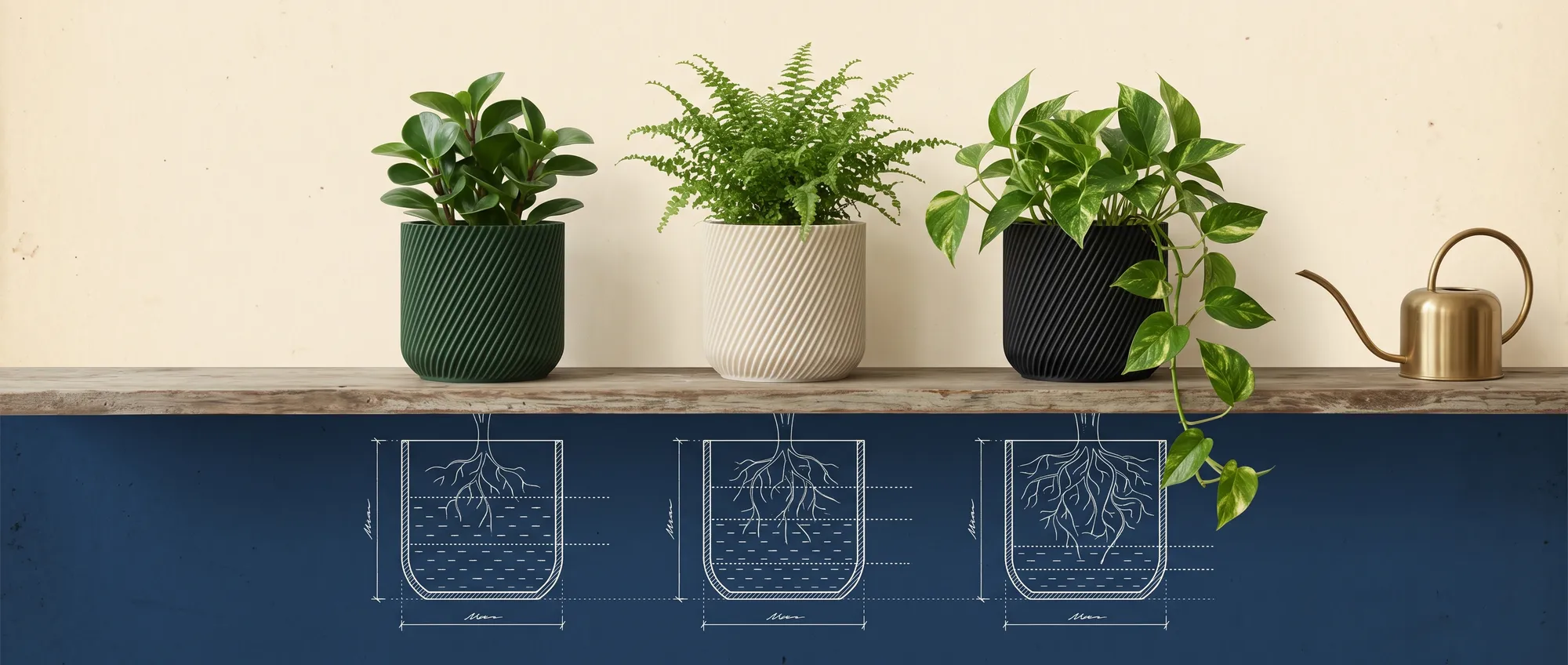
- Roots need air as much as water. Soil that never dries starves them of oxygen — which is why soggy pots rot, and why drainage matters more than frequency.
- The pot decides
- Terracotta breathes and dries quickly; plastic and printed pots hold moisture longer. Small pots dry in days, large ones in weeks.
- Light drives thirst
- A plant in a bright window drinks twice as fast as the same plant in a dim corner. More light, more water — less light, less.
- Seasons set the rhythm
- Growth slows in winter. The plant that drank weekly in July may want water every three weeks in January.
Three habits worth keeping
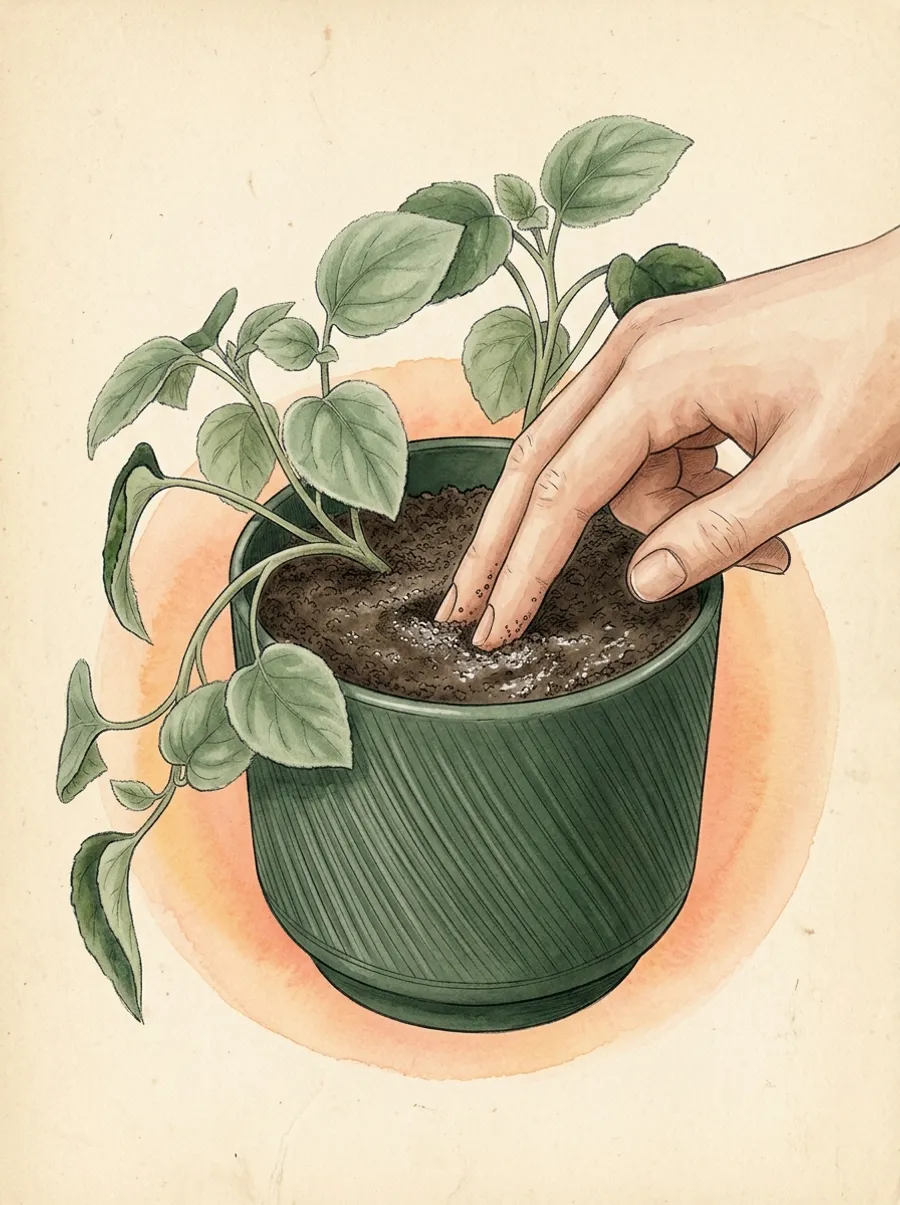
The finger test
Push a finger two knuckles into the soil before you even lift the can. Damp? Wait. Dry? Water.
Beats every app and every schedule; for succulents, wait until fully dry.
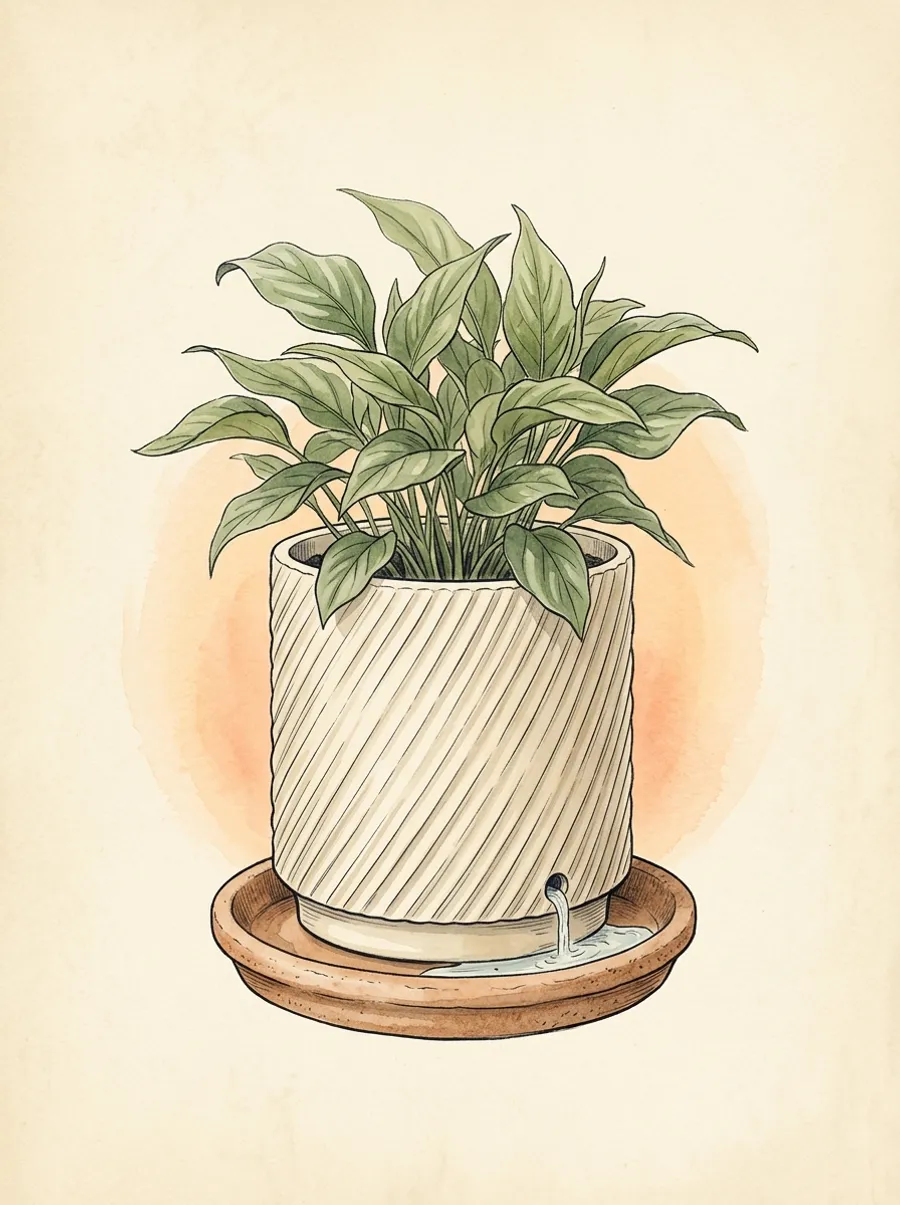
Water through
When you do water, water thoroughly: a slow pour until it runs from the drainage hole, then let it finish dripping.
A deep soak every ten days beats a splash every two.
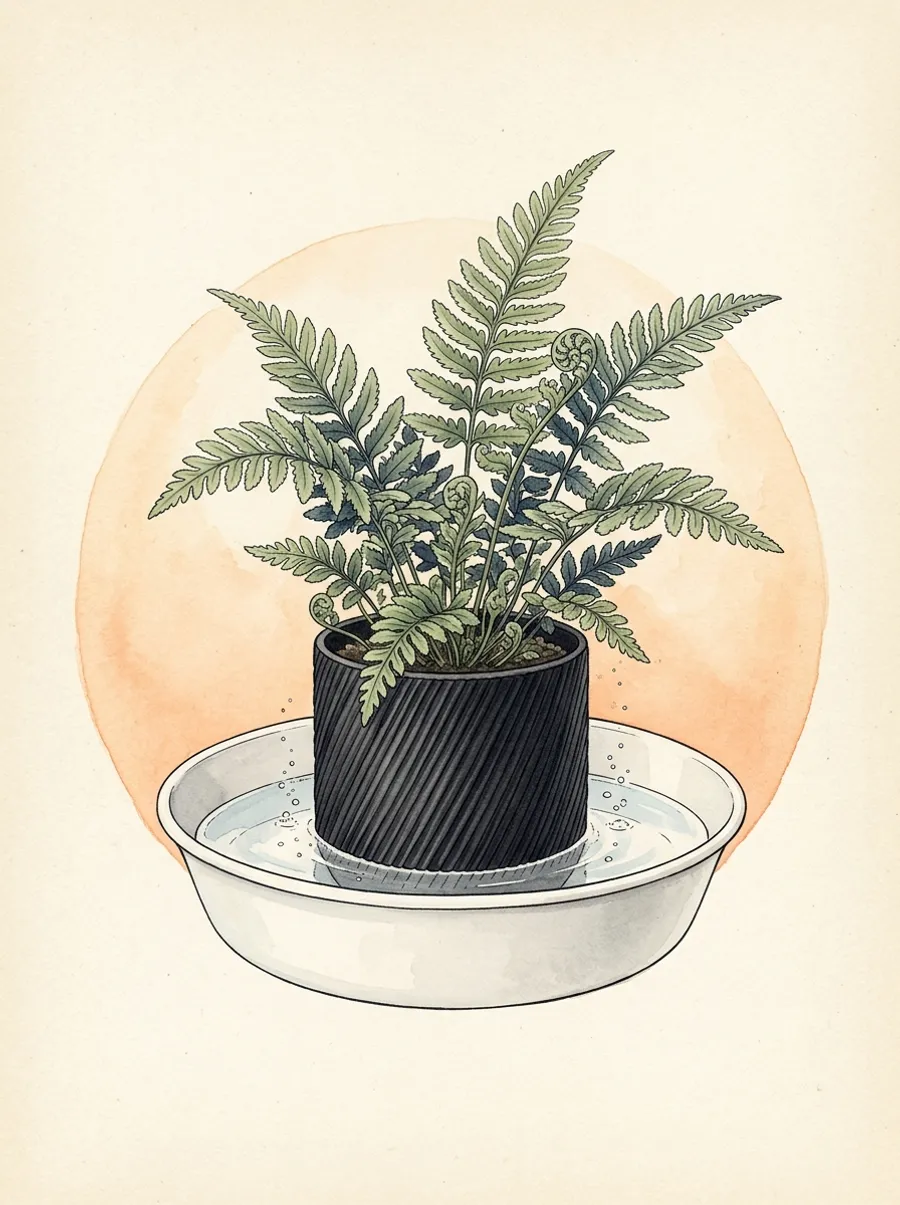
The bottom bath
Set the pot in a few centimetres of water and let the soil drink upward for twenty minutes.
Ideal for ferns, calatheas and any soil that has gone hard and water-shy.
The perfect watering, step by step
-
Check before you pour
Finger-test the soil, or lift the pot — a light pot is a thirsty plant. If in doubt, wait a day.
-
Use room-temperature water
Cold water shocks roots. Refill the can after each watering and let it sit until next time — chlorine escapes, the temperature settles.
-
Pour slowly, at the base
Aim the spout at the soil, not the leaves, and pour slowly enough that the water soaks in instead of pooling.
-
Let it drain completely
Water until it runs from the drainage hole, then let the dripping stop entirely. Roots sitting in runoff are roots starting to rot.
-
Empty the saucer, note the day
Tip out whatever collected, and jot the date somewhere. A month of notes builds better intuition than years of guessing.
“The best watering schedule is no schedule — it is a plant you walk past every day, and actually see.”
Reading the leaves
Yellow, soft leaves. The classic sign of too much water. Let the soil dry properly, and check the drainage hole isn't blocked.
Crispy brown tips. Dry air more often than dry soil. Group plants together, or move them away from heaters and vents.
Drooping right after watering. The roots may already be waterlogged. Unpot, trim anything brown and mushy, repot in fresh airy soil.
Tiny flies around the pot. Fungus gnats breed in constantly damp topsoil. Let the top few centimetres dry, and switch to bottom watering for a while.
Water runs straight through. Dried-out soil has shrunk from the pot walls. A twenty-minute bottom bath will re-open it.
White crust on the soil. Mineral build-up from tap water. Flush the pot with generous water every month or two, and skip a feeding.